What are the stages of getting a mortgage?
Think of the home loan journey as a few simple steps:
Getting your finances in order:
Once we connect you with a mortgage broker close to you, they will help you understand your existing budget by going through your savings, income, outgoings and any debts you may have. This is your starting point.
Doing the research:
With a better idea of your finances, your broker will check out all the different mortgage options that could suit you and your situation. This includes scanning through 1000s of mortgage products, so you don’t have to.
Applying for a mortgage:
Once you’re happy with the recommendation, your mortgage broker will prepare and submit your application with the mortgage lender.
Waiting for approval:
As the lender checks everything over, your broker will make sure that everything is running smoothly and progress your mortgage application where needed.
The legal bits:
If you’re buying a property in England or Wales, this is where you’ll need to instruct a property lawyer or conveyancer. They will be the ones who will walk through all the necessary paperwork with you.
Getting the keys:
Yay! Once your mortgage application is approved and all the paperwork and legal stuff is sorted, you are ready to move in!
So that’s the mortgage process explained. It hopefully gives you a rough overview of what’s ahead. But now, let’s get into the nitty-gritty of how to apply for a mortgage and what happens next:

Defining the steps in the mortgage approval process
1. Check your credit score:
Lenders want to know you are good for the money. If you are not sure where you stand, there are free tools online. If you need to, look up how to improve your credit score for a mortgage - a few tweaks can make a big difference.
2. Get an Agreement in Principle (AIP):
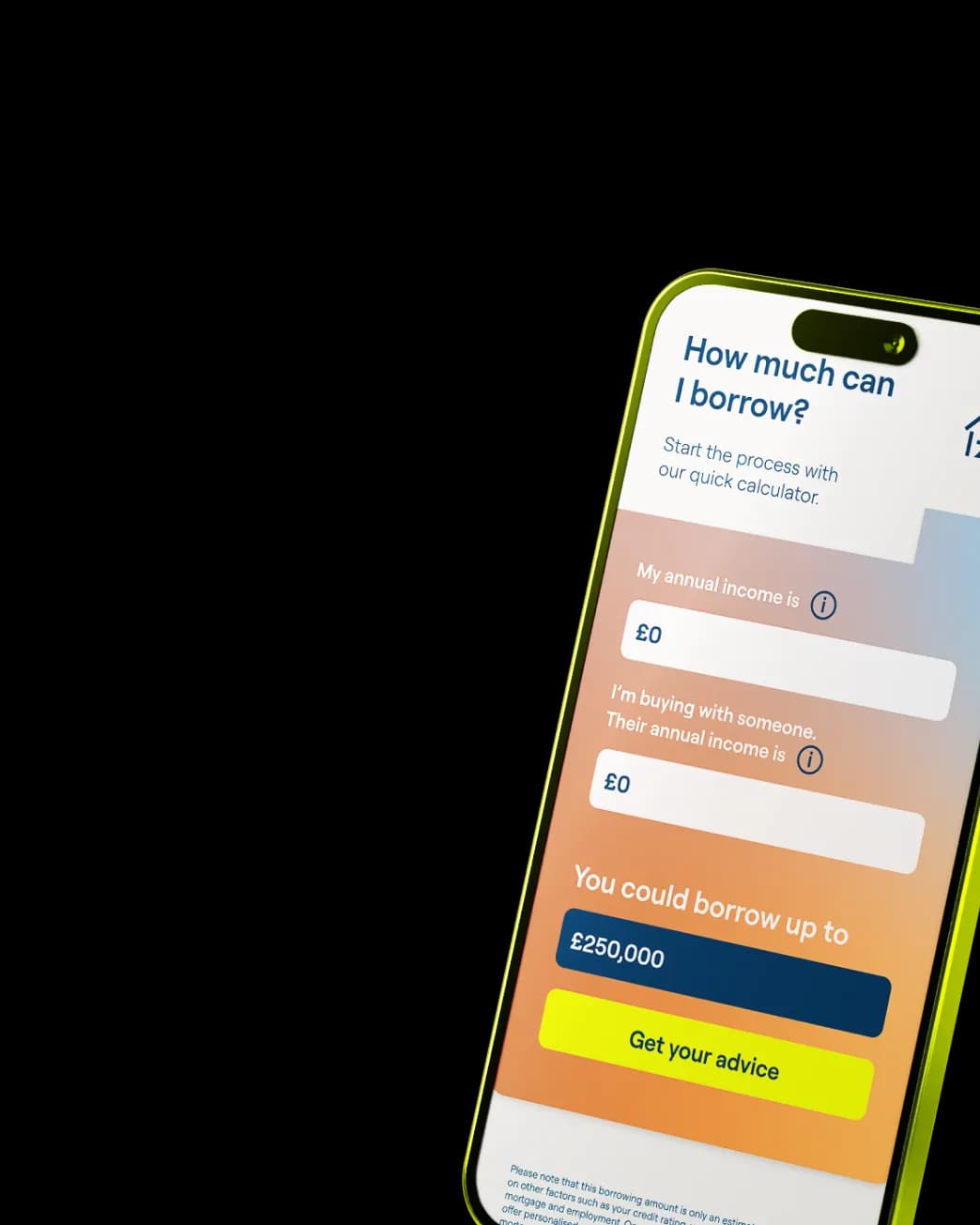
This is a quick check from a lender to see how much you could borrow – use our calculator now for a rough idea. Keep in mind that what our calculator and the lender’s Agreement in Principle tell you are not a promise or a guarantee of what you actually can borrow, but an estimate, and a handy tool for house-hunting.
3. Your broker sends in your application:
Gather your payslips (or tax returns, if self-employed), bank statements, and ID. Your broker will make sure everything is there and submit your application.
4. Property checks and assessing the risks:
The lender will value the property, assess any risks and double-check your details. Whilst this step may take some time, your broker will be there for you - keeping you updated and ready to answer any questions you might have.
5. Get your mortgage offer:
If all goes well, you will get a formal offer, which means that you’re nearly there.
6. Exchange and complete:
Your property lawyer handles the legal stuff, and then you get the keys. Time to celebrate!
How long does it take to get a mortgage?
Wondering how long does it take to get a mortgage approved?
Here is a rough idea:
Agreement in principle: A day or two.
Full application to offer: Usually 2 to 6 weeks, depending on how quickly you can provide your documents and how busy the lender is.
Offer to completion: This timeline depends on how long all the necessary checks take, for example, searches and surveys, as well as the property lawyers getting their paperwork in order. Our estimates say that this could take anywhere from 6 to 18 weeks.
Completion: Another 2 to 4 weeks to wrap up the legal side. However, keep in mind, that there are two parties involved, and the sellers also need to provide their information so that the sale can go ahead.
All in all, the whole process could take anywhere from 10 to 28 weeks; however, the average is usually around 16 weeks. Keep in mind that this could vary on a case-by-case basis. With a mortgage consultant at your side, they can support you along the way and iron out the process to keep on top of your application, so you don’t have to.
How big does my deposit have to be?
This is a big one.
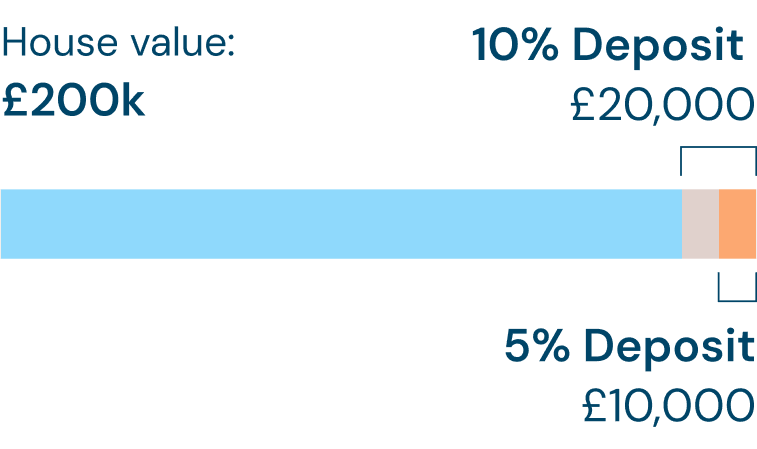
Most lenders want at least 5% of the property price as a deposit, but if you can manage 10% or more, you will most likely get a better mortgage deal and rate.
For example, for a £200,000 home, a 5% deposit would be £10,000 or £20,000 for 10%. The bigger your deposit, the less you need to borrow, and the more attractive you look to lenders.
What if my deposit isn’t big enough?
If your finances are good, but your deposit isn't large enough, there could be another option available for you, as some lenders offer low-deposit mortgages and schemes specifically designed to help buyers purchase a property. Our brokers also have access to mortgage deals which don't need a deposit.
How do I calculate how much I can borrow?
Lenders usually offer between 4.5 and 6 times your annual income, but it depends on your outgoings and credit history.
If you want to know how to get approved for a mortgage loan, start by being realistic about your budget. Play around with our mortgage calculator below and chat with a mortgage broker for a clearer picture.
Remember, it is not just about what you can borrow, but what you can comfortably afford each month.
Getting a mortgage for the first time can feel like a lot, but we believe in you! You’ve got this. Plus, when you have a mortgage broker by your side, you’ll have the support you need throughout the process.
Use this step-by-step guide to getting a mortgage as your roadmap, and remember, there is no such thing as a silly question. Your new home is just around the corner - and you are more ready than you think!